

Our Experts Are Here to Help
1.877.299.4511
Thursday, June 23, 2011
Texas Bill for Texting While Driving Ban Vetoed
Texas Governor Rick Perry has decided to veto House Bill 242, or more importantly, the addendum regarding the ban on texting while driving for all drivers in Texas. The original bill, authored by Tom Craddick, would have allowed retired law officers to carry firearms.
Perry says: "I support measures that make our roads safer for everyone, but House Bill 242 is a government effort to micromanage the behavior of adults."
While that shows confidence in the ability of adult drivers to make the right choices all the time, what this means is that drivers who are older than 18 may be able to use their cell phones while driving, as long as they do not commit any other road violation.
Currently in Texas, texting behind the wheel is already prohibited for teen drivers. Ideally, as these teen drivers grow older, they carry over the lesson of lessening driving distractions. Hopefully, drivers don’t see this as a free-pass for being distracted at the wheel.
While this is a huge letdown for driving safety advocates everywhere, it can only mean that they have to find other methods for making the message stick, without having to resort to the law. Information campaigns in real life and all over the internet are finding increasingly-clever ways to deliver the message, and hopefully it sticks.
What to do now? Educate yourself. Arm yourself with proper knowledge regarding texting while driving, or being distracted behind the wheel in general. You can tell your children, your family, your friends, your co-workers and your community. Find advocacies or groups in your area. If there is none --- why not start one?
Perry says: "I support measures that make our roads safer for everyone, but House Bill 242 is a government effort to micromanage the behavior of adults."
While that shows confidence in the ability of adult drivers to make the right choices all the time, what this means is that drivers who are older than 18 may be able to use their cell phones while driving, as long as they do not commit any other road violation.
Currently in Texas, texting behind the wheel is already prohibited for teen drivers. Ideally, as these teen drivers grow older, they carry over the lesson of lessening driving distractions. Hopefully, drivers don’t see this as a free-pass for being distracted at the wheel.
While this is a huge letdown for driving safety advocates everywhere, it can only mean that they have to find other methods for making the message stick, without having to resort to the law. Information campaigns in real life and all over the internet are finding increasingly-clever ways to deliver the message, and hopefully it sticks.
What to do now? Educate yourself. Arm yourself with proper knowledge regarding texting while driving, or being distracted behind the wheel in general. You can tell your children, your family, your friends, your co-workers and your community. Find advocacies or groups in your area. If there is none --- why not start one?
Labels: distracted driving, texting and driving, texting ban
Posted by DriverSchool
at
5:32 AM
0 Comments


Wednesday, June 1, 2011
Texas Texting-while-Driving Ban Still Has Hope
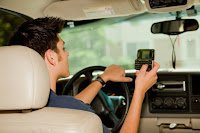
Approved late last Sunday, lawmakers in Austin approved the ban on texting-while-driving. It just needs Governor Rick Perry's signature before it can become Texas law.
We have been following this almost-law closely for a while now, and to see that it just needs that one little more push before it can finally become Texas law makes supporters hope for the best. Since its inception, the statewide texting-while-driving ban has been met with both support and opposition.
If the ban becomes law, beginning September 1, offenders may expect to pay a fine of up to $200 when caught operating their phone at the wheel. Lawmakers hope that a fine is a small price to pay for potentially saving lives. If people could do that one thing, which is give focus on their driving by avoiding cell phones, it could mean saving lives.
In 2009, 408 Texans died from distracted driving.
Sometimes, singling out teens to be the primary offenders of texting-while-driving ignores the fact that even adults with driving experience can be guilty of this crime too. Or people who believe they could multi-task, not seeing for themselves how those seconds focused on a phone affects how they operate a vehicle.
There's speculation that the governor will not sign it, stating that it could be a local ordinance instead, and here's a chance for you to be heard: you may be able to call, fax and send letters to his office. He has 20 days - Phone: 512-463-2000 ask for legislative affairs / Fax: 512-463-1849. Mail letters to Office of the Governor, PO Box 12428, Austin, TX 78711. If you support this bill, tell your friends to do the same.
Labels: texas driver safety, texas driving laws, texting and driving, texting ban
Posted by DriverSchool
at
12:25 PM
0 Comments
Friday, December 10, 2010
Driver Safety: Great Christmas Gifts for Safe Driving
When searching for that perfect Christmas gift for a loved one, why not show how much you really care about them by giving a gift that can make their driving safer and could possibly save their life or the lives of others. There are a lot of gadgets on the market now that can help make driving safer and easier, and most are surprisingly low priced.
Rearview Cameras
According to the web site Kids and Cars.org, two children are killed and more than six children are injured every week when they run behind a car that is backing up. Blind spots behind a car can reach from 11 feet behind a small sedan up to 18 to 28 feet for minivans and pickup trucks. The problem is so bad that the Department of Transportation has issued new rules that all new vehicles must be equipped with back-up cameras starting in 2014 but you don’t have to wait until then.
Back-up cameras are available on the market at auto parts and electronic retail stores and they are surprisingly inexpensive. A rearview camera system with camera, monitor, and connecting hardware can be found for as little as $100.
Global Positioning Systems (GPS)
GPS devices aren't new but they are very handy when a driver is traveling in unfamiliar territory. If you want to give a GPS system as a gift, make sure that the one you purchase is voice activated. If there is any manual input required for the system, make sure the one you get doesn't allow data to be entered when the car is in motion. Trying to input data manually into a GPS is very distracting, removing a driver's eyes and concentration away from the road and that can easily lead to a collision.
Seat Belts and Child Seats
Learn more about the proper driving posture to prevent collisions and injuries.
Teen drivers
Teen drivers, with an "It'll never happen to me." attitude and a lack of driving experience face a lot of dangers on the road. While parents can't watch them every second, there are some devices that can prevent the teen from taking unnecessary chances and can monitor their driving habits. The teen may not appreciate it but they can give parents some peace of mind.
Teen Driver Safety Devices
Breathalyzers
A variety of personal breathalyzers are available on the market for less than $100. When you are having a hard time convincing a loved one that they have had too much to drink and drive, these devices come give an unbiased evaluation of how much the person has had to drink.
Technology to Prevent Drunk Driving
Closed-Hood Car Jump Starter
When a battery dies, this device allows re-charging a dead battery by connecting a cable to the cigarette lighter or accessories charger on each vehicle, eliminating the need to open the hood and connect battery cables and avoiding the possibility of electrocution.
Auto Association Gift memberships
Memberships in auto associations are available through various insurance and credit card companies. When a vehicle breaks down on the road, membership in an auto association eliminates a lot of worry.
Pet restraints
For your favorite pet, pet restraints are a great auto safety device. You also don’t want them becoming a missile in the event of a collision. There are pet harnesses for all sizes of animals that easily attach to the seat belt mechanism. A restrained pet is a safe pet.
Rearview Cameras
According to the web site Kids and Cars.org, two children are killed and more than six children are injured every week when they run behind a car that is backing up. Blind spots behind a car can reach from 11 feet behind a small sedan up to 18 to 28 feet for minivans and pickup trucks. The problem is so bad that the Department of Transportation has issued new rules that all new vehicles must be equipped with back-up cameras starting in 2014 but you don’t have to wait until then.
Back-up cameras are available on the market at auto parts and electronic retail stores and they are surprisingly inexpensive. A rearview camera system with camera, monitor, and connecting hardware can be found for as little as $100.
Global Positioning Systems (GPS)
GPS devices aren't new but they are very handy when a driver is traveling in unfamiliar territory. If you want to give a GPS system as a gift, make sure that the one you purchase is voice activated. If there is any manual input required for the system, make sure the one you get doesn't allow data to be entered when the car is in motion. Trying to input data manually into a GPS is very distracting, removing a driver's eyes and concentration away from the road and that can easily lead to a collision.
Seat Belts and Child Seats
- Child Safety Seats and Booster seats
- Seat belt snuggers
- Shoulder harness adjusters
Nothing is more important for the safety of a child than a properly installed child safety seat or booster seat that is age appropriate for the child. One major problem that has contributed to a lot of unnecessary deaths and injuries is the fact that too many children are being graduated from child safety seats to seat belts before they are big enough to wear a seat belt. The Insurance Institute for Highway Safety (IIHS) says that children should remain in booster seats until they are at least 4’9” tall. For the average child, that is anywhere from nine to eleven years of age. For information on the safest child safety and booster seats, visit the IIHS website at: http://www.iihs.org/research/topics/boosters/default.html
One problem with seat belts is that they can become loose as an occupant or a child in a booster seat moves around. There are two different types of seat belt snuggers on the market that eliminate that problem for both adults and children. For adults, there is the CG Lock which snugs a seat belt and provides more stability for the seat occupant. It can also be used on child safety and booster seats.
SeatSnug is specifically designed for child safety seats and booster seats. Even after buckling the seat belt and cinching it tight, a child's movements can cause the belt to come loose. SeatSnug is designed to prevent that.
Both of these products are available for under $50.
Seat belts are the primary life saving device in the car but too often they go unused because they are uncomfortable or do not fit well. The problem is most acute for smaller drivers who find an ill-fitting shoulder harness chafing against their neck. That problem can be easily solved with shoulder harness adjusters that are readily available at auto parts stores for a very low price
Learn more about the proper driving posture to prevent collisions and injuries.
Teen drivers
Teen drivers, with an "It'll never happen to me." attitude and a lack of driving experience face a lot of dangers on the road. While parents can't watch them every second, there are some devices that can prevent the teen from taking unnecessary chances and can monitor their driving habits. The teen may not appreciate it but they can give parents some peace of mind.
Teen Driver Safety Devices
- Trip monitors
- Cell phone/texting killers
These devices, available for less than $90, plug into the car’s onboard diagnostic port and provide a visual display on a key-chain monitor that reports a teen’s top speed, hard braking, and number of miles driven. The monitor is tamper proof and can be reset, by the parent, before the next trip.
These devices, available as a key-chain fob or as an app on the teen’s phone prevent the teen from using a cell phone or from texting while the vehicle is in motion.
Breathalyzers
A variety of personal breathalyzers are available on the market for less than $100. When you are having a hard time convincing a loved one that they have had too much to drink and drive, these devices come give an unbiased evaluation of how much the person has had to drink.
Technology to Prevent Drunk Driving
Closed-Hood Car Jump Starter
When a battery dies, this device allows re-charging a dead battery by connecting a cable to the cigarette lighter or accessories charger on each vehicle, eliminating the need to open the hood and connect battery cables and avoiding the possibility of electrocution.
Auto Association Gift memberships
Memberships in auto associations are available through various insurance and credit card companies. When a vehicle breaks down on the road, membership in an auto association eliminates a lot of worry.
Pet restraints
For your favorite pet, pet restraints are a great auto safety device. You also don’t want them becoming a missile in the event of a collision. There are pet harnesses for all sizes of animals that easily attach to the seat belt mechanism. A restrained pet is a safe pet.
Labels: back-up cameras, cell phone, child safety, gps, holiday driving safety, prevent distracted driving, rearview cameras, seat belt safety, texting and driving, trip monitors
Posted by DriverSchool
at
6:58 AM
0 Comments
Thursday, November 4, 2010
Del Rio: City Considering Texting Ban
In Del Rio, last Tuesday, a meeting of the city council was held with one big topic being considered: a texting ban in the city.
Del Rio Police Department Chief Arnaldo Ramos spearheaded the topic, giving both local and national statistics which link traffic accidents and texting. Ramos even cited other cities in Texas which have outright banned texting while driving: Austin, El Paso, Galveston and the most recent one to get a texting-while-driving ban, San Antonio.
He insisted that the scope of the proposed ban be inclusive of all cell phone use while driving, not just texting. Councilman Fred Contreras suggested that all city staff set the example, by not partaking in the practice.
Mayor Roberto “Bobby” Fernandez closed the session by suggesting to the city staff that they begin researching on cell phone policies or other ordinances and enforcement by looking at samples from other Texas communities.
Del Rio Police Department Chief Arnaldo Ramos spearheaded the topic, giving both local and national statistics which link traffic accidents and texting. Ramos even cited other cities in Texas which have outright banned texting while driving: Austin, El Paso, Galveston and the most recent one to get a texting-while-driving ban, San Antonio.
He insisted that the scope of the proposed ban be inclusive of all cell phone use while driving, not just texting. Councilman Fred Contreras suggested that all city staff set the example, by not partaking in the practice.
Mayor Roberto “Bobby” Fernandez closed the session by suggesting to the city staff that they begin researching on cell phone policies or other ordinances and enforcement by looking at samples from other Texas communities.
Labels: texting and driving, texting ban
Posted by DriverSchool
at
10:19 AM
0 Comments
Monday, July 19, 2010
Distracted Driving Laws for the State of Texas
Distracted driving seems like an easy problem to solve when you hear it, but you wonder, why is it still such a persistent problem? In Texas, to remedy distracted driving, several laws have been approved to counter this.
Two new laws have been enacted: one that bans teens from using mobile phones and text messaging devices and the other one prohibiting the use of cellphones in school zones.
In Texas, here are the current list of prohibitions:
Fines for breaking the prohibitions may be from $200 to $500 or more.
In Missouri City, the first of June marked the start of the distracted driving ban. The city has even posted traffic signs that state, "No Texts, Emails or Apps While Driving." In El Paso, the ban has been in effect since the first of May. Though texting/cell phone use while driving is prohibited, hands-free devices are still allowed to use.
Galveston has started even earlier, with the ban being in effect since the fourteenth of January. Fines go up to $500.
As of yet, Texas lawmakers are still considering to give these laws an "O.K." for Houston.
Read about other Distracted Driving Campaigns or learn about Oprah's No Phone Zone campaign!
Two new laws have been enacted: one that bans teens from using mobile phones and text messaging devices and the other one prohibiting the use of cellphones in school zones.
In Texas, here are the current list of prohibitions:
- Learner's permit holders and drivers under 18 are not allowed to use cell phones while driving. This includes stops.
- School bus operators are not allowed to use cell phones while driving.
- School crossing zones are "No Phone Zones."
- Dallas, Austin, Galveston, El Paso, Missouri City and Stephenville have all enacted these distracted driving laws with minor variations.
Fines for breaking the prohibitions may be from $200 to $500 or more.
In Missouri City, the first of June marked the start of the distracted driving ban. The city has even posted traffic signs that state, "No Texts, Emails or Apps While Driving." In El Paso, the ban has been in effect since the first of May. Though texting/cell phone use while driving is prohibited, hands-free devices are still allowed to use.
Galveston has started even earlier, with the ban being in effect since the fourteenth of January. Fines go up to $500.
As of yet, Texas lawmakers are still considering to give these laws an "O.K." for Houston.
Read about other Distracted Driving Campaigns or learn about Oprah's No Phone Zone campaign!
Labels: distracted driving, learners permit, texas laws, texting and driving
Posted by NSC - Traffic Safety
at
10:37 AM
0 Comments
Visit Us
Search
Loading
Categories
Recent Posts
- When Did Parking Lots Become So Dangerous
- Discover New Discounts on Your Auto Insurance
- Vehicle Emergency – Procedures and Preparedness
- Best and Worst Cities for Texas Drivers
- Refresh Your Driving Skills
- Teen Drivers and Traffic Tickets
- There is No Such Thing as a Motor Vehicle Accident
- Commonly Missed Warning Road Signs and Single Vehi...
- Graduated Driving License Law Calculator
- Getting your CDL license in Texas can be a Confusi...



1.877.299.4511
OnlineTexasDefensiveDrivingCourse.com
© 2014 OnlineTexasDefensiveDrivingCourse.com. All Rights Reserved.