

Tuesday, February 7, 2012
Traffic Tickets, Suspension and Driver Responsibility in Texas
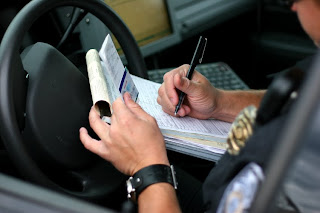
Ask anywhere: traffic tickets, suspension and driver responsibility are some of the most searched items related to driving. Getting a driver's license in Texas is a big enough feat. An even bigger challenge then, is keeping your driving record clean.
The words above are commonly-searched for one reason: individuals want a clean driving record and need to figure out the steps to make that happen. Let's try and break down the processes for each in a more generic way that applies to most counties in Texas.
Traffic Tickets: what to do?
If you drive careful enough, you'll manage to avoid tickets. But once you've been issued a traffic ticket in Texas, you only have 10 days to respond to it. The two options are to either pay it, or you can request to have your traffic ticket dismissed by completing a Texas driving safety course.
Paying the fine is essentially admitting to the court that you are guilty, contact your local court to find out how you could settle the fine. They usually take personal checks, cash, debit cards or credit cards. It varies from county-to-county.
Depending on the reason for the ticket, sometimes, there's an option for taking a defensive driving course. This is a way of dismissing the ticket --- by taking the course, you effectively remove up to four points on your driving record and you may even get discounts on your insurance. If the driver has been going 25 MPH over the posted limit, a driver safety course option will not be available.
Suspended license: what to do?
If a driver has been caught driving irresponsibly multiple times, the driver's license can get suspended. The Texas Department of Public Safety (DPS) will be informed of the suspension. If driving is essential for that driver’s education or livelihood, they should contact their local district court for the requirements on a restricted license.
Driver Responsibility Program: what is it?
Much like New York: life is harder for bad drivers in Texas. Their driver responsibility program helps enforce their safe driving policies. For a driver with over 6 points on their driving record, there will be an annual fee to be paid for up to 3 years. This could be an additional $100 a year or up to $2000 a year, depending on the number of points and severity of driving offense.
Okay, now that you know what tickets, suspensions and driving responsibility is about in Texas: what can you do to avoid them? Simple --- and this is easier said than done --- be a safe driver.
Labels: driving record, driving safety course, texas defensive driving course, texas drivers license, texas traffic ticket
Posted by DriverSchool
at
11:09 AM
0 Comments


Friday, November 18, 2011
Red Light Cameras Don’t Lie But They Don’t Always Know The Truth

The use of red light cameras is growing throughout the country. They have been proven to cut down on the number of collisions at the intersections where they are installed but, unless the driver’s face is clearly visible in the photo, they can end up sending a ticket to the wrong person.
A recent news article by KXAN TV in Austin TX tells the story of a 76 year old woman in Kingsland TX who received a traffic ticket in the mail for running a red light. When a driver runs a red light monitored by a red light camera, the ticket is automatically sent to the registered owner of the vehicle. The problem in this case is that she had sold that particular car more than two years before. Since that time, she has been involved in an ongoing struggle with the Texas DMV to prove that the car is no longer hers and that she received the ticket erroneously.
Luckily she has the paperwork to back up her claim but the bureaucracy has been slow to respond and her case has been sent to a collection agency for non-payment. It appears that this fight could go on for some time before it is resolved.
This author had a similar experience. After loaning my car to one of my children, I received a ticket in the mail along with a picture showing my car going through a red light. The result was an immediate phone call with my child promising to take responsibility and pay the fine right away. Unfortunately, in some of these cases, things don’t always go so smoothly.
If you loan your car to another driver, make sure that that driver is aware that he or she is responsible for any ticket they might receive. If you have any doubts, before loaning out your car, make sure you get something in writing showing the date and time that the car was loaned out and when it was returned.
In the case of selling your vehicle to another driver, KXAN TV offered the following advice from the Texas DMV:
· Fill out a vehicle transfer notification either online or through the mail within 30 days of the sale of your car. The DMV then becomes an advocate for you if your title is not transferred by the buyer-they will help waive any tickets or toll violations, etc. If it is after 30 days then person can still register the vehicle transfer notification but it is up to the seller to argue their own cases
· Go with the buyer to the DMV to register the vehicle instead of just selling the vehicle from the meeting place.
· Take the license plates at the time of the sale, which forces the buyer to get new plates and register the vehicle.
If you are the driver and have been caught by a red light camera, some states require that you attend a mandatory driving school.
Labels: driving school, red light camera, texas traffic ticket, traffic fines
Posted by DriverSchool
at
11:38 AM
0 Comments
Tuesday, November 1, 2011
Driver Responsibility Laws
Drivers in at least four states may find themselves paying more than just a traffic fine when they get a ticket. In an attempt to cut down on habitual traffic offenders and to raise more revenue for states, these states (Michigan, New Jersey, New York, and Texas) have imposed a surcharge over and above the normal traffic fines and court fees that a motorist may have to pay as a result of getting a traffic ticket (also known as a Driver Responsibility Law). If the motorist has accumulated a set number of points over a designated period, the motorist is charged a surcharge that increases for every point over the limit and continues so long as the points remain on the driver's record.
All four states have similar laws with the exception of New York. Three of the states impose the surcharge over a one year period until the points have fallen below the pre-set level however New York imposes the surcharge for a three year period.
| STATE | MINIMUM POINTS | WITHIN | SURCHARGE AMOUNT | AMOUNT PER EACH ADDITIONAL POINT | PENALTY FOR NON-PAYMENT |
| Michigan | 7 Points | As Soon As Points are Imposed | $100 | $50 | Interruption of driving privileges |
| New Jersey | 6 Points | 3 Years | $150 | $25 | Indefinite suspension of driving privileges, possible lien and or garnishment of wages. |
| New York | 6 Points | 18 Months | $100 Per Year for 3 Years | $25 | Suspension of driver's license |
| Texas | 6 Points | 3 Years | $100 | $25 | Suspension of driver's license |

The typical time limit to pay the surcharge and avoid suspension of driving privileges is 30 days.
Each of these states also impose a heavier surcharge for more serious offenses such as DUI, refusal to submit to a breath test, and no proof of insurance. Typically the surcharges for a DUI are $1,000 or more per year.
To prevent accumulation of the minimum number of points, each of these states allow a driver to attend a driver improvement school however, once the minimum number of points have been reached, it is too late to try to reduce the points by taking a driver safety course and the surcharges will be imposed.
Labels: driver record, driver responsibility program, suspended drivers license, texas driver responsibility law, texas traffic ticket
Posted by DriverSchool
at
1:01 PM
0 Comments
Friday, August 5, 2011
Avoid Drivers License Points on your Texas Driving Record

Driving record points are the only kind of points that you don't want to score. Think about it. It does no good for you as a driver/insurance payer/car owner. Having more points on a driving record will make your life harder. This is especially true if you are a new/teen driver.
Teen drivers get a bad rap due to their inexperience, but with a little help and guidance, they will be able to avoid points on their driving record by doing a few simple things.
Here are some ways to make sure that you avoid points on your driving record.
Keep check of your driving record – Always make sure your driving record is accurate. It's far too easy to forget dates when it comes to tickets or parking infractions.
Parking infractions – Speaking of parking infractions: check your local county if parking infractions goes down in your driving history. Make sure there are no unpaid parking citations and you should be able to avoid points.
Traffic tickets – This is truly easier said than done: drive safe. Always be updated with your local laws including school zones, stop signs or red lights. Driving safe not only keeps you and other motorists safe, but it is also the way to not get traffic or speeding tickets. A traffic ticket may spell doom, depending on your county. Just one might get your driving privileges in trouble.
Take a Texas defensive driving course online – A court-approved defensive driving course will actually help you remove points off your driving record. It's a great way to refresh your memory on driving safety skills. It is also a great way to remove up to four points, keeping your driving record unblemished.
Be nice – No matter how right you think you are or how angry you get, always be nice to an officer of the law when you get pulled over. Some people get into more trouble by trying to defend their mistakes. If the mistake is a minor one, sometimes you will be lucky enough to get off with a warning. It is also worth noting that being nice to your fellow motorists/people on and off the road will get you all sorts of good things in life.
Labels: defensive driving, defensive driving course, driving record, texas defensive driving, texas driver record, texas traffic ticket
Posted by DriverSchool
at
12:12 PM
0 Comments
Monday, May 9, 2011
Texas Annual Seatbelt Campaign's 10th Year - Click it or Ticket it

In San Antonio, law enforcement officers from the state will join the Texas Department of Transportation in San Antonio to launch the 10th annual "Click It or Ticket" campaign. According to the TxDOT, in the 10 years since the campaign has been started, there have been 2,843 fewer traffic fatalities and 48,000 fewer serious injuries. According to them, the state has also saved more than $10 billion in associated costs.
Not wearing a seat belt isn't just about being against the law: it is also risky, and may increase the potential for serious injuries to drivers and passengers.
Launched last Thursday (May 5), it is an effort not only to catch violators, but also an effort to educate to keep motorists safe. It is also a warning that not buckling up could become costly for motorists: tickets for not wearing a seat belt may cost from $250 and up, not including court costs.
Law enforcement and TxDOT will be joining forces from May 23 to June 5, including Memorial Day in a stepped-up effort to enforce seat belt laws to save more lives in Texas.
Labels: click it or ticket it, seat belt laws, seat belt safety, seatbelt campaign, texas traffic ticket, TXDOT, wear seat belt
Posted by DriverSchool
at
11:04 AM
0 Comments
Monday, April 11, 2011
Texas Considers 85 MPH Speed Limit

Texas Legislature is considering raising the speed limit to 85 mph, the highest in the country. The bill has already been approved and is in the process of being reviewed by the state senate. They stress that, if signed into law, this only applies to certain areas where there are long stretches of almost-empty rural roads, and that TxDOT will only be allowed to raise the speed limit after traffic and engineering studies are completed.
Currently the rural interstate roads have a speed limit of 75 mph during the day and 65 mph at night, 80 mph on certain specified segments. Trucks are allowed 70 mph and 65 mph at night. On the other hand, the urban interstate speed limits are 70 mph during the day and 65 mph at night.
The proposal will likely be approved for rural roads.
Some groups, however, oppose the idea. According to the Insurance Institute for Highway Safety, speeding is a factor in about a third of all fatal crashes in 2009. They also specify that higher speeds during crashes reduce the effectiveness of a vehicle's safety features.
Some Texans have raised their concerns regarding this: is getting to a destination fast enough really worth all the potential danger? Other views suggest that imposing a higher speed limit would only create drivers who drive too fast, sometimes even going beyond the imposed limits. Higher speed limits equal higher speeds.
Aside from the obvious safety concerns, some are wondering about the bill's timing, regarding fuel consumption. According to the U.S. Department of Energy, every 5 mph driven over 60 is like paying an additional $.0.24 per gallon for gas.
The bill is still up for consideration --- and drivers should be taking every precaution they can while driving, higher speed limits or not.
Labels: interstate roads, rural roads, speed limit, texas speeding ticket, texas traffic ticket, trucks
Posted by DriverSchool
at
12:34 PM
0 Comments
Wednesday, January 12, 2011
Why Opting for a Defensive Driving Course is a Good Idea
This is a choice drivers across America face every day. If you are truly not guilty of the offense and you can prove it somehow, then obviously going to traffic court and defending yourself may be the best choice. However, if you are guilty of the offense paying up and attending defensive driving course is probably the best choice.
Here are some of the reasons why.
1. Going to court and defending yourself with no positive evidence to back up your story will result in a case of the officer’s word against yours. Remember that the judge has heard every excuse in the book and will more than likely lean toward the word of the officer.
2. If you hire a lawyer to fight the case for you, you will most likely wind up paying a lot more money than you would if you had just paid the ticket and, despite the advertisements, there is no way that a lawyer can guarantee that you will win your case. Not only could you lose, you could wind up paying an even heavier fine and court costs in addition to the attorney's fees.

The benefits of attending defensive driving course:
• In most states, attending defensive driving course will reduce or eliminate the points that would be imposed on your driving record for the ticketed offense. In Texas, you will qualify to dismiss your traffic ticket if you have not taken a defensive driving course in the last 12 months. NOTE: You are allowed take a TEA-approved defensive driving course 1 time every 12 months to dismiss your traffic ticket.
• In a lot of states, attending defensive driving course can result in lower insurance rates or, at least, no increase in your insurance rates as a result of getting the ticket. In Texas, you can receive a 10% TX auto insurance discount by completing this course, which is valid for 3 years!
• If qualified for a "Safe Driver" status under your state's laws, you may be able to keep your safe driver status.
• We all tend to develop bad habits over time and defensive driving course can give you tools to change your driving habits and keep you from getting a traffic ticket again. You will also be updated on any new laws that you may not be aware of.
Taking the course is also convenient, it is completed 100% online in the comfort of your own home. NO CLASSROOM Required!
Labels: auto insurance discount, defensive driving, defensive driving course, insurance discount course, insurance rates, texas traffic ticket, traffic ticket dismissal
Posted by NSC - Traffic Safety
at
7:53 AM
0 Comments
Thursday, January 14, 2010
How to Dismiss a Texas Speeding Ticket

While getting a speeding ticket in Texas is never a happy occasion, drivers can mitigate the effects of the speeding ticket by taking a defensive driving course. In addition to not having points added to the violator's driving record and avoiding an auto insurance increase, drivers can use the course to refresh their driving skills and evaluate their current driving behavior.
Here are the steps to follow to have your Texas speeding ticket dismissed and reap all the benefits of a Texas online defensive driving course:
Step One: Check your speeding ticket for your court date. You must ask the court for permission to take a defensive driving course for ticket dismissal, in person or via US mail, by the appearance date indicated on your ticket. You must submit a completed copy of the Affidavit form with your signature notarized, proof of valid non-commercial Texas driver’s license, the court administrative fee, and a copy of your insurance policy when requesting permission to take the defensive driving course for speeding ticket dismissal.
Step Two: Once the court grants permission for you to take the course, you’ll have 90 days to complete the course and submit your certificate of completion to the court. Conveniently, the Texas ticket dismissal course is offered online. So your next step is to register for and take the Texas defensive driving course. If you take the course online, you don’t have to take it all at once; you can log in and out of the course as many times as necessary. Your place in the course will be saved so the next time you log in, you can just pick up where you left off in the previous session.
Step Three: After you complete the speeding ticket course, the school will issue a certificate of completion. The certificate will be sent to you for you to submit to the court; by Texas law, the school can't do that for you. You may need to send a copy of your driving record to the court with your certificate; check with the county that has jurisdiction over the speeding ticket to be sure. If a copy of your driving record is required and you don't send it, the TX speeding ticket dismissal process could be delayed. Be sure to submit the certificate by the deadline imposed by the court.
Tips to Dismiss your Traffic Ticket
- In the state of Texas, you may to take a defensive driving course once every 12 months to dismiss a traffic ticket.
- The court may allow you to pay your speeding ticket fine online; check with the court's website.
- The points you receive for a speeding ticket in Texas will remain on your driving record for a period of three years; however, you can avoid having the points assessed if you take a defensive driving course.
- Even if you haven't received a ticket, you can take a defensive driving course to have points removed from your Texas driver's license and to receive insurance discounts.
Labels: defensive driving, online defensive driving tx, texas defensive driving, texas speeding ticket, texas traffic ticket, traffic ticket, traffic ticket dismissal, tx traffic ticket
Posted by NSC - Traffic Safety
at
12:00 PM
0 Comments
Visit Us
Search
Categories
Recent Posts
- When Did Parking Lots Become So Dangerous
- Discover New Discounts on Your Auto Insurance
- Vehicle Emergency – Procedures and Preparedness
- Best and Worst Cities for Texas Drivers
- Refresh Your Driving Skills
- Teen Drivers and Traffic Tickets
- There is No Such Thing as a Motor Vehicle Accident
- Commonly Missed Warning Road Signs and Single Vehi...
- Graduated Driving License Law Calculator
- Getting your CDL license in Texas can be a Confusi...



1.877.299.4511
OnlineTexasDefensiveDrivingCourse.com